Page 56 - AstaGuru Masters Legacy April 2024
P. 56
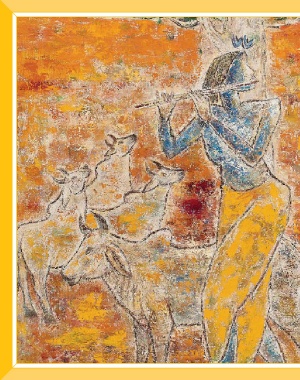
A highly symbolic


                                                                                                                                                                                                  Hebbar


                                                                                                                                                                                                          painting


                                                                                                                                                                                          Born in Kattingeri, Karnataka in 1911, K.K. Hebbar grew up
                                                                                                                                                                                          watching his father sculpt Ganesha idols and took an interest
                                                                                                                                                                                          in art. Receiving some preliminary training in Mysore, he moved
                                                                                                                                                                                          to Bombay to join the Sir J.J. School of Art. In 1949, he joined
                                                                                                                                                                                          the Academie Julian in Paris like many of his contemporaries.
                                                                                                                                                                                          Here, he would be inspired by the Western Art surrounding
                                                                                                                                                                                          him. His works, however, reflected his inspirations in Indian
                                                                                                                                                                                          folk art. Rooted in  Indian traditional art, his works would
                                                                                                                                                                                          explore Western styles of abstraction and surrealism. His works
                                                                                                                                                                                          would also delve into social issues that concerned Hebbar,
                                                                                                                                                                                          such as poverty, hunger and war. He was deeply fascinated
                                                                                                                                                                                          by various art forms such as Mughal miniature painting and
                                                                                                                                                                                          Kathak. Among the people influential in Hebbar’s oeuvre are
                                                                                                                                                                                          Amrita Sher-Gil for her command over the Western technique
                                                                                                                                                                                          and Srilankan philosopher Ananda Coomaraswamy whose
                                                                                                                                                                                          talks led Hebbar to explore traditional Indian art further.

                                                                                                                                                                                          His early works consisted of landscapes and figural compositions,
                                                                                                                                                                                          which would later inform the distinctive style of his entire
                                                                                                                                                                                          oeuvre. One of his most famous periods was the Kerala period
                                                                                                                                                                                          in his early years. During this time, he predominantly painted
                                                                                                                                                                                          the landscapes of the state inspired by several Impressionist
                                                                                                                                                                                          artists including  Paul Gauguin. This would  later influence  the
                                                                                                                                                                                          development of Modern Indian Art and would solidify his position
                                                                                                                                                                                          as a leading modernist of the time. The period lasted for over
                                                                                                                                                                                          a decade and heavily featured the rich and vibrant seascapes
                                                                                                                                                                                          of Kerala. With his experimentation with landscapes over the
                                                                                                                                                                                          years, he would gain command over colour and movement.
                                                                                                                                                                                          His blend of Impressionism with abstraction and surrealism
                                                                                                                                                                                          created a distinct style that found widespread appreciation.

                                                                                                                                                                                          He was named a fellow of the Lalit Kala Akademi in 1976, and
                                                                                                                                                                                          was awarded the Padma Bhushan by the Government of India
                                                                                                                                                                                          in 1989. He also served as the chairman of the Artists’ Centre in
                                                                                                                                                                                          Mumbai from 1953 to 73.
   51   52   53   54   55   56   57   58   59   60   61